
Clinton has already said that she is visiting New Delhi to start a strategic dialogue which will include issues like climate change and clean energy. To put the issue of climate change on fast track, Clinton will be joined by President Barrack Obama's special envoy for climate change, Todd Stern, who is known as a man in hurry.
The divergent utterances by environment and forests minister Jairam Ramesh and prime minister's special envoy on climate change Shyam Saran have created a good deal of ambiguity within and outside the country over the government's strategy for these talks.

Alarmed by the confusion created by the public expression of divergent opinions by his key advisors on climate change, the prime minister summoned Saran and Ramesh and asked them to put their heads together and come forward with an agreed text that would reflect both their concerns, a senior government official confirmed.
The government is finalising the national action plan on climate change and would release this in June, said Shyam Saran, Prime Minister's special envoy for climate change. The action plan would focus on key issues like improving energy efficiency, harnessing solar energy, studying the melting and cracking of icebergs on the Himalayas and understanding the dynamics of coastal and island territories.The plan would contain mechanisms for implementation of various policies.

A top US delegate at Copenhagen summit denied the possibility that hacked e-mails had made the case for sceptics stronger and said the incident would not affect the fate of climate change bill in the American Senate.

During the election campaign Trump had said Clinton would be in jail if he won the elections. He now faces the consternation of supporters who took that pledge literally.

Criticising the Copenhagen Climate Summit for being "limited to a group of countries", Bolivia will organise an alternative international talks in April on the issue.
Briefing reporters at the conclusion of a two-day meeting of 17 major economies on climate change and energy, prime minister's special envoy Shyam Saran said there has to be a balance between historical responsibility and current emissions.
Such a partnership between the two countries, after the civilian nuclear deal, is essential to jointly meet the challenges of climate change, prime minister's special envoy on climate change Shyam Saran told a meeting of US corporate leaders organised by the US India Business Council. USIBC had played a significant role in the passage of the Indo-US civilian nuclear deal, despite tough hurdles.
Shyam Saran, Prime Minister's special envoy on climate change,demitted office on Sunday after a fruitful tenure which saw him play a key role in ending India's nuclear isolation and drafting policies on environment-related issues.
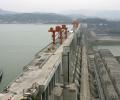
China defends its construction of a dam on the Brahmaputra river in Tibet, addressing concerns from India and Bangladesh about its potential impact on water flow and the environment.
Speaking at an event in New Delhi, jointly held by National Thermal Power Corporation and the Confederation of Indian Industry, he added that developing countries should also not expect any financial or technical assistance from developed nations to help reduce their carbon footprint.
This was conveyed by Union minister for New and Renewable Energy Farooq Abdullah to US Special Envoy for Climate Change Todd Stern in a meeting, where the two leaders also deliberated on ways to intensify collaboration to harness renewable energy.

We are looking for an agreement that is fair and durable: US
India will most likely sign the Comprehensive Test Ban Treaty--a top non-proliferation priority of the Obama Administration--if the world moves "categorically towards nuclear disarmament in a credible time-frame," India's point man for nuclear issues has indicated.
Saran's appointment will bring in a professional diplomat, who does not have any experience of handling internal security (which was Narayanan's strength) and issue of terrorism. But on other side, Saran has the backing of more than three decades of experience in international affairs and has recently gained thorough understanding of issues related to climate change.
India has pressed the new Barack Obama Administration to lift the 'unnecessary' restrictions on international trade with New Delhi on dual use items and technology. Addressing a meeting at the prestigious Brookings Institution, a Washington-based think-tank, prime minister's special envoy on climate change Shyam Saran also hoped that America would scrap the so-called entity list, which prohibits sale of US technology to a number of Indian companies.
Former foreign secretary Shyam Saran says he is "optimistic" of the nuclear deal being cleared at the Nuclear Suppliers Group meeting. Saran -- the prime minister's special envoy on climate change and the India-US nuclear civilian agreement -- also confirmed that Prime Minister Manmohan Singh will attend the G-8 summit in Tokyo later this week.

'Good to meet US Secretary of State @SecBlinken today. I welcome President Biden's strong commitment to strengthen the India-US Strategic Partnership, which is anchored in our shared democratic values and is a force for global good,' Modi tweeted.
With his administration focusing on alternative sources of energy so as to reduce dependence on fossil fuel, US President Barack Obama wants to build Indo-US renewable energy partnership which would end up in benefiting not only the two countries, but also the entire world.

Modi's unexpected announcement of achieving net zero by 2070 may have neatly deflected the pressures on India to sign up to an ambitious pledge but it does nothing to dispel the ecological emergency that threatens all life on the planet, , points out former forerign secretary Shyam Saran, the prime minister's special envoy and chief negotiator on climate change 2007-2010.

US wants differentiation between developed and developing countries scrapped

Adopted after nearly two weeks of hectic negotiations, the first Global Stocktake deal, being termed the UAE consensus, urges countries to accelerate efforts toward the phase-down of unabated coal power, which is a climb down after India and China strongly resisted the singling out of coal.

The Special US Envoy on Climate Change, Todd Stern, in a letter informed the UN Framework Conventional of Climate Change Secretariat about the Obama administration's decision in this regard, which is part of the voluntary commitment made by economies including India and China during the Copenhagen Climate Change summit.

The last meeting of the 2+2 was held in New Delhi and the next meeting is to be hosted by the US in Washington, DC.

Garcetti suggested that the two countries are working on certain agreements to bolster defence cooperation and they are likely to be firmed up when Modi visits the US or President Joe Biden comes to India in September for the G20 summit.

In the meeting, Ngodup Dongchung, an official in the Tibetan government-in-exile and representative of the Dalai Lama, thanked Blinken for the continued support by the US to the Tibetan movement.

United States Secretary of State John Kerry will arrive in New Delhi on July 30 on a three-day visit during which he will hold talks with Indian leaders on a range of key bilateral, regional and global issues of mutual interest besides co-chairing the fifth India-US Strategic Dialogue.

The two sides are also expected to explore ways to deepen defence collaboration, including exercises, defence transfers and technologies ahead of the next edition of the 2+2 defence and foreign ministerial dialogue to be held in the US later this year, they said.
India and China have gone into a huddle over the possible existence of a Danish text, which the rich nations may wield at the climate change talks.

In recent years, the twin demands of both religion and defence have been added to the development argument to sweep aside environmental and terrain considerations while undertaking infrastructure development in the Himalayan zone, points out former foreign secretary Shyam Saran.

Describing the "essential nature" of the relationship between India and China as "adversarial", former foreign secretary Shyam Saran on Friday said instead of competing with Beijing in every field, New Delhi should look at its strengths and work on them.

India has an unprecedented opportunity to develop solar industry because like China, it offers scale which is critical to reducing costs and to stimulate innovation, says Shyam Saran.

India on Thursday (local time) wrapped up its December Presidency of the United Nations Security Council with a special focus on terrorism, Global South and maritime security.

Blinken and Indian leaders on Wednesday will discuss a plethora of pressing issues such as the fluid situation in Afghanistan, regional security concerns, COVID-19 response and ways to boost Indo-Pacific engagement, people familiar with the agenda of talks said.

'If every city had the strongest tools that are currently available only to a few, the world's climate prospects would glow far more brightly.'

Seeking to seize "transformative moment" in ties with India, US Secretary of State John Kerry will arrive in New Delhi on Wednesday for talks on key issues with the new Indian leadership.

He has Biden's ear and because of the past relationship, Biden will actually listen to him, unlike some past residents of Roosevelt House.

India said on Thursday that it desired normal relations with all its neighbours, including Pakistan, and advised Islamabad to create a conducive atmosphere, including by taking "credible, verifiable and irreversible actions" to stop cross border terrorism against it and enable the two countries to engage and address issues bilaterally.

Bibhu Prasad Routray explains why the US is supporting Japan's resolve to release 'treated' radioactive waste water into the Pacific Ocean. And what role China plays in the US decision.
 © 2026 Rediff.com - Advertise with us - Disclaimer - Privacy Policy - Sitemap - Feedback - About us - Terms of use - Grievances